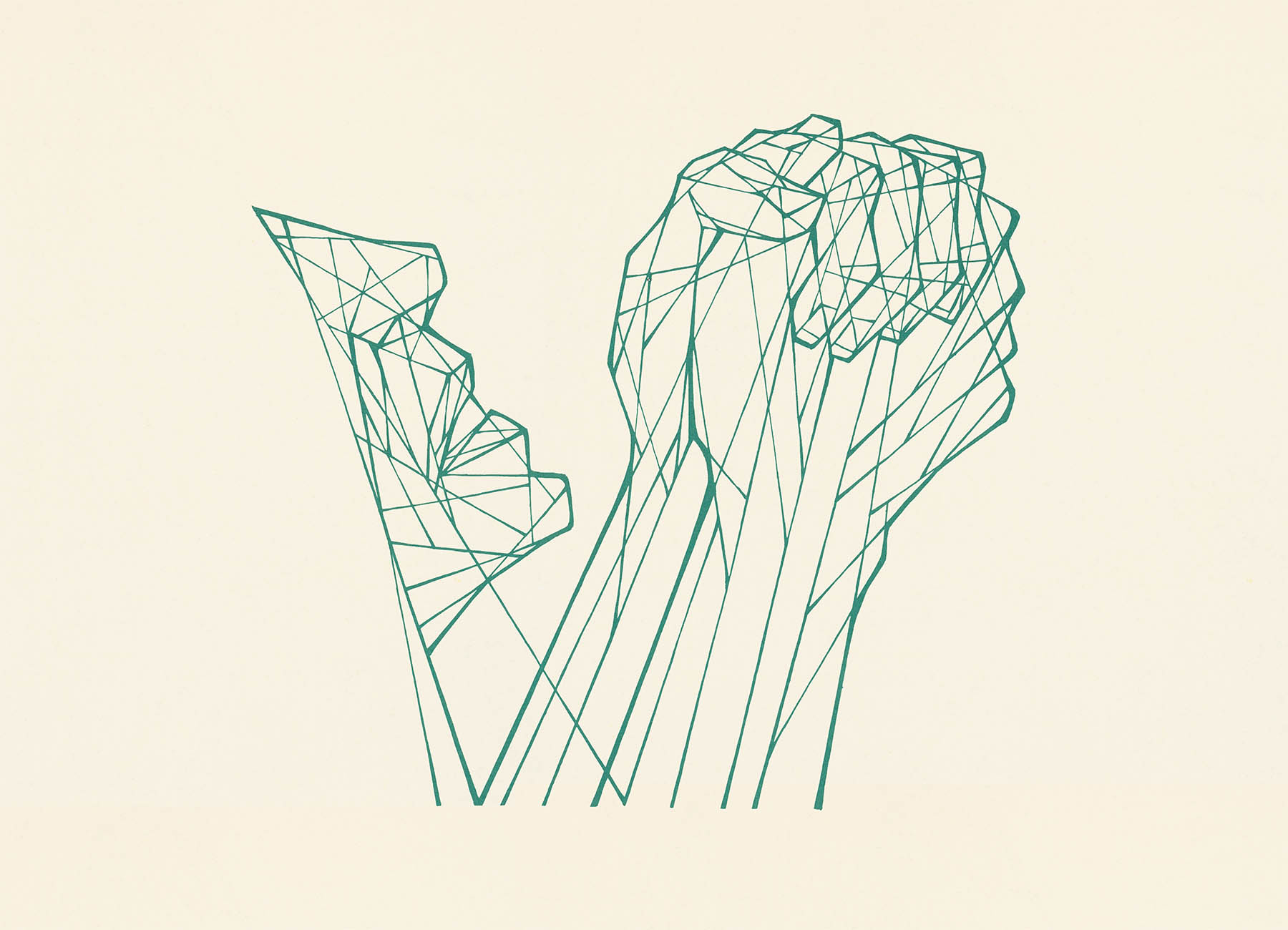
Drawing by Ismar David from The Psalms: A new English translation, linked with permission from Ismar David Archive .
For other images of Ismar David drawings, see here.

הָֽבָה־לָּ֣נוּ עֶזְרָ֣ת מִצָּ֑ר וְ֝שָׁ֗וְא תְּשׁוּעַ֥ת אָדָֽם׃
12O grant us help against the foe,
for human help is worthless.
Drawing by Ismar David from The Psalms: A new English translation, linked with permission from Ismar David Archive .
For other images of Ismar David drawings, see here.
The inclusive “we” specifically includes the addressee (“you and I and possibly others”), while the exclusive “we” specifically excludes the addressee (“he/she/they and I, but not you”). This grammatical distinction is called “clusivity.” While Semitic languages such as Hebrew or most Indo-European languages such as Greek or English do not make that distinction, translators of languages with that distinction have to make a choice every time they encounter “we” or a form thereof (in English: “we,” “our,” or “us”).
For this verse, the Jarai and the Adamawa Fulfulde translations both use the exclusive pronoun, excluding the Lord.
Verses 10-13 are the same as 60.9-12, except that in verse 10a fortified translates a different word from the one used in 60.9; there is, however, no difference of meaning between the two.
Quoted with permission from Bratcher, Robert G. and Reyburn, William D. A Handbook on the Book of Psalms. (UBS Helps for Translators). New York: UBS, 1991. For this and other handbooks for translators see here .
No comments yet.
Leave a Reply
You must be logged in to post a comment.